

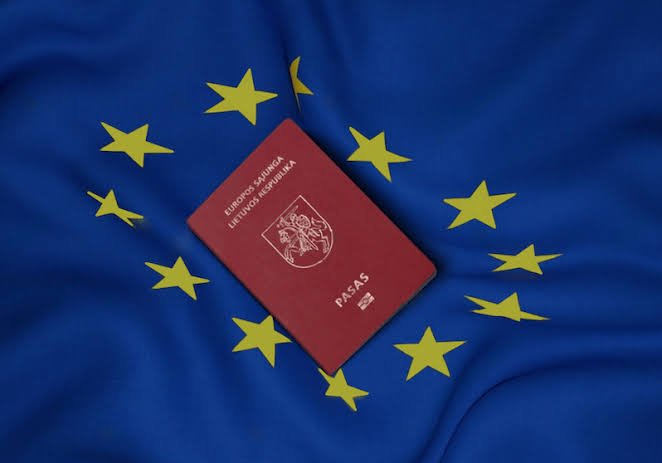
If your parents, grandparents or great-grandparents were Lithuanian citizens, you may be eligible for Lithuanian citizenship by descent. Every year thousands of descendants living in the United States, South Africa, Israel, the United Kingdom, Canada and Australia begin this process to reconnect with their family heritage and obtain an EU passport.
If your parents, grandparents or great-grandparents were Lithuanian citizens, you may be eligible for Lithuanian citizenship by descent. Every year thousands of descendants living in the United States, South Africa, Israel, the United Kingdom, Canada and Australia begin this process to reconnect with their family heritage and obtain an EU passport.
Many applicants assume the procedure is complicated. In reality, it follows a clear sequence of legal steps. Understanding each stage before you begin can save months of unnecessary delays.
Step 1. Check if You Qualify for Lithuanian Citizenship by Descent
Before collecting documents, you first need to determine whether you meet the Lithuanian citizenship by descent requirements.
In most cases, eligibility depends on:
- Your ancestor being a citizen of the Republic of Lithuania before June 15, 1940.
- Your family relationship with that ancestor (parent, grandparent or great-grandparent).
- When and where your ancestor emigrated.
- Whether you may keep your current citizenship under Lithuanian dual citizenship rules.
Many people searching “Can I get Lithuanian citizenship by descent?” discover that the answer depends on historical facts rather than ethnicity alone.
For Jewish families whose ancestors left Lithuania before World War II, the legal assessment often requires additional historical research, particularly when proving pre-war Lithuanian citizenship.
Step 2. Collect Documents Proving Lithuanian Ancestry
The next stage is gathering evidence.
Applicants typically need documents proving both:
- the ancestor’s Lithuanian citizenship; and
- the direct family line connecting the applicant to that ancestor.
Examples include:
- Lithuanian passports
- military service records
- internal passports
- archive certificates
- birth certificates
- marriage certificates
- naturalization records
- death certificates
If original Lithuanian documents no longer exist, historical archive research is often required.
This is frequently the longest part of the entire application.
Step 3. Obtain Missing Archive Records
Many applicants worry because they possess no Lithuanian documents at all.
Fortunately, this is common.
Professional archive searches can locate historical records from Lithuanian state archives, municipal archives and other official sources.
For many families, especially those whose ancestors emigrated more than 100 years ago, archive research becomes the key element that proves eligibility.
Step 4. Legalize, Translate and Prepare the Documents
Once all documents have been collected, they must be prepared according to Lithuanian legal requirements.
This usually includes:
- certified translations;
- Apostille legalization where required;
- document review;
- preparation of legal explanations for discrepancies in names, dates or family history.
Small inconsistencies between historical records can significantly delay the application if they are not properly addressed.
Step 5. Submit Your Lithuanian Citizenship Application
Applications are submitted through Lithuania’s electronic migration system (MIGRIS).
After uploading the documents electronically, applicants are instructed where and when to present the original documents, typically at a Lithuanian embassy, consulate, or Migration Department office. Originals must generally be presented after the Migration Department completes its preliminary review.
This is the official beginning of the legal review process.
Step 6. Wait for the Government Review
Many people ask:
“How long does Lithuanian citizenship by descent take?”
The answer depends on two separate stages.
The preparation stage – collecting documents, archive research, translations and legal preparation – typically takes around 2 to 4 months, although complex archive searches may take longer. After submission, the Migration Department reviews the application, and the overall government process commonly takes up to 12 months, depending on the case and workload.
During the review, authorities may request additional information or supporting documents if clarification is needed.
Step 7. Receive the Decision
If the application is approved, you officially become eligible to obtain Lithuanian citizenship.
The final steps may include:
- receiving the official decision;
- completing any required formalities;
- applying for your Lithuanian passport.
Once your citizenship is restored or recognized, you gain access to the rights associated with Lithuanian and European Union citizenship.
Does Lithuania Allow Dual Citizenship?
One of the most common questions is:
Does Lithuania allow dual citizenship?
The answer is yes – but only in specific situations established by Lithuanian law.
Many descendants of Lithuanian citizens who left Lithuania before March 11, 1990 may qualify to retain both Lithuanian citizenship and their current nationality, provided they meet the legal requirements.
Because every family’s history is different, determining eligibility for Lithuanian dual citizenship by descent should always involve an individual legal assessment.
Benefits of Lithuanian Citizenship
Obtaining Lithuanian citizenship offers far more than a passport.
Benefits may include:
- living and working anywhere in the European Union;
- studying at European universities;
- easier travel with an EU passport;
- passing citizenship to future generations;
- reconnecting with your Lithuanian family heritage.
For many applicants, restoring citizenship is both a legal process and a deeply personal journey.
Frequently Asked Questions
How do I get Lithuanian citizenship by descent?
You must first confirm your eligibility, collect documents proving Lithuanian ancestry, prepare the required legal documentation, submit your application through MIGRIS, and complete the government review process.
Can I get Lithuanian citizenship if my great-grandparent was Lithuanian?
Possibly. Great-grandchildren may qualify, provided they can prove both the ancestor’s Lithuanian citizenship and the direct family relationship.
How much does Lithuanian citizenship by descent cost?
Government fees represent only one part of the overall cost. Expenses may also include archive research, certified translations, Apostilles, legal document preparation and professional assistance, depending on the complexity of the case.
How long does the process take?
Most applicants should expect approximately 14 to 16 months from the beginning of document preparation to the final decision, although complex cases can take longer.
Final Thoughts
The application process for Lithuanian citizenship by descent is rarely difficult because of bureaucracy – it is challenging because every family’s history is unique.
The strongest applications are those prepared with complete historical evidence, properly translated documents and a clear legal strategy before submission.
Taking the time to prepare your case carefully can significantly improve the efficiency of the application process and help avoid unnecessary delays.