

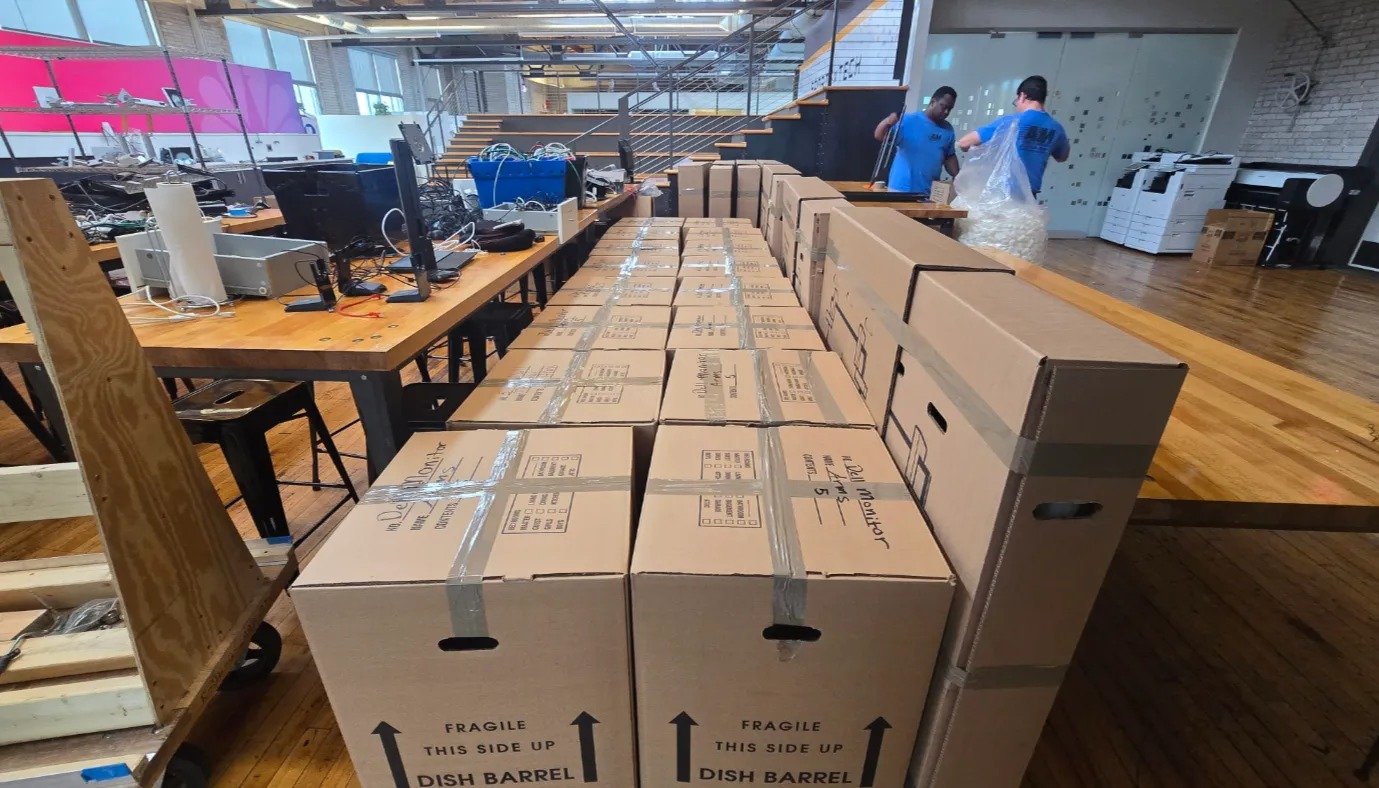
Business moves punish delay twice: revenue stops while desks sit in transit, and employees lose focus when IT and furniture land in the wrong rooms. Creative studios face extra risk when lighting rigs, sample libraries, and client archives must stay organized through chaos. Whether you lease in the North Loop, a Bloomington corporate center, or a St. Paul maker space, the goal is identical: reopen with phones, networks, and workflows intact. Office and studio relocations succeed when facilities, IT, and movers share one labeled floor plan instead of guessing where each workstation belongs.
Scoping commercial moves beyond square footage
Office relocations start with an asset list, not a truck size guess. Count workstations, conference tables, filing systems, and kitchen equipment. Studios add prop shelves, mannequins, and fragile equipment cases. Identify items staying, going to storage, or recycling through e-waste vendors.
Visit both locations with the crew lead or project manager. Measure freight elevators, loading dock hours, and ceiling heights for tall shelving. Downtown Minneapolis towers may restrict after-hours access unless security receives a COI forty-eight hours ahead.
Phased timelines that keep teams working
Full weekend cutovers work for some firms; others need nightly phases that move five desks at a time while sales calls continue. Map critical systems: servers, printers, reception, and QA benches. Move nonessential departments first so a partial failure does not halt billing or shipping.
Label cables at both ends before disconnecting. Color-coded bins for each department beat a sea of identical banker boxes. Photograph rack layouts you must restore exactly, especially in small server closets.
Commercial move planning checklist
- Assign an internal move captain with authority to decide on the spot
- Book freight elevator and loading dock slots in writing
- Provide COI meeting landlord requirements
- Coordinate IT disconnect/reconnect windows with MSP or internal staff
- Mark furniture with new floor plan codes matching destination rooms
- Plan secure transport for files under privacy or compliance rules
IT, telecom, and utility coordination
Internet installation lead times in the Twin Cities can exceed two weeks for new circuits. Order service before you sign the lease amendment. Carry LTE failover for payment terminals if you must process cards during transition.
Phone systems using VoIP need extension mapping. Old analog lines may still exist in legacy St. Paul offices; confirm porting dates so clients do not hit dead numbers Monday morning.
Studios, showrooms, and client-facing spaces
Design studios often store client projects mid-review. Seal and label those containers separately with do-not-stack markings. Photography studios need climate awareness for gear; cold vans hurt battery performance in January loads.
Retail showrooms moving within Edina or Ridgedale trade areas should photograph display layouts for insurance. Glass cases and millwork require crating beyond standard blanket wrap.
Employee communication and change management
Tell staff the sequence: pack personal items themselves, leave monitors on desks for movers to wrap, and remove food from kitchen fridges before disconnect day. Publish a FAQ covering parking, badge access, and where to report damaged items.
Remote employees shipping personal equipment to the new address need RMA labels and tracking centralized so receiving does not confuse personal boxes with company assets.
FAQ: Twin Cities business move questions
Can we move during business hours?
Yes, with phased planning. Expect noise and partial productivity loss; schedule client meetings off-site.
Who handles secure document destruction?
Shredding vendors are separate from movers. Book destruction before vacating the old suite so nothing sensitive is left in abandoned cabinets.
What about furniture we are donating?
Charities need advance pickup appointments. Do not leave unsolicited items in loading docks; fines follow.
Are after-hours moves more expensive?
Overtime and security escort fees may apply downtown. Compare total downtime cost versus premium scheduling.
Post-move punch list and warranty tracking
Walk the new space with facilities before employees unpack. Test HVAC zones, restroom supplies, and emergency lighting. Log furniture damage within twenty-four hours for warranty claims.
Update Google Business Profile, directory listings, and client portals with the new address the same week you move. Mail forwarding through USPS is temporary; change accounts at source.
Furniture liquidation, lease surrender, and landlord walk-through
Commercial leases often require broom-clean surrender with patch and paint standards. Schedule furniture removal before the final landlord inspection so holes and carpet wear are visible for negotiation. Liquidators need access codes and elevator slots just like movers.
After-hours security and downtown loading docks
Minneapolis and St. Paul towers may charge security overtime for moves past 6 p.m. Confirm rates during quoting. Badges expire at midnight; crews caught mid-load may need renewal fees. Building engineers sometimes must escort freight elevator use; include their contact on your run sheet.
Testing IT before you announce the new address
Send internal test emails and print jobs from the new suite before updating client-facing signatures. DNS and firewall rules lag physical furniture. A polished lobby with dead phones frustrates staff more than unpacked boxes in a working office.
Sustainability and e-waste in office purge weeks
Old monitors and batteries cannot sit in the loading dock. Hennepin and Ramsey counties offer business recycling events; book before purge week. Document destruction certificates satisfy HIPAA and financial clients when you discard file cabinets.
Phased file room and compliance closet moves
Legal and HR files may need locked transport with chain-of-custody logs. Separate those cartons from general office boxes on the bill of lading. Shredded material still weighs enough to need dollies; do not leave confidential bins for overnight unsecured loading docks.
Break room and kitchen reset
Refrigerators must be emptied and defrosted before move. Coffee machines with water lines need disconnect appointments. Assign one employee to verify the new break room outlet map before plugging microwaves into circuits that cannot handle load.
Vendor COI naming for multi-tenant buildings
Landlords require additional insured endorsements with exact legal building names. A typo delays approval and blocks freight elevator keys. Send COI requests two weeks before move with building management CC’d on the thread so approval does not sit in a generic inbox.
Signage, wayfinding, and client-facing first impressions
Order temporary lobby signage before move week so clients find the suite on day one. Wayfinding beats fancy furniture if customers wander the wrong hall. Assign staff to greet clients at the old address online until Google updates.
Affinity Moving: (612) 416-6640 · customers@affinity-moving.com