

Introduction
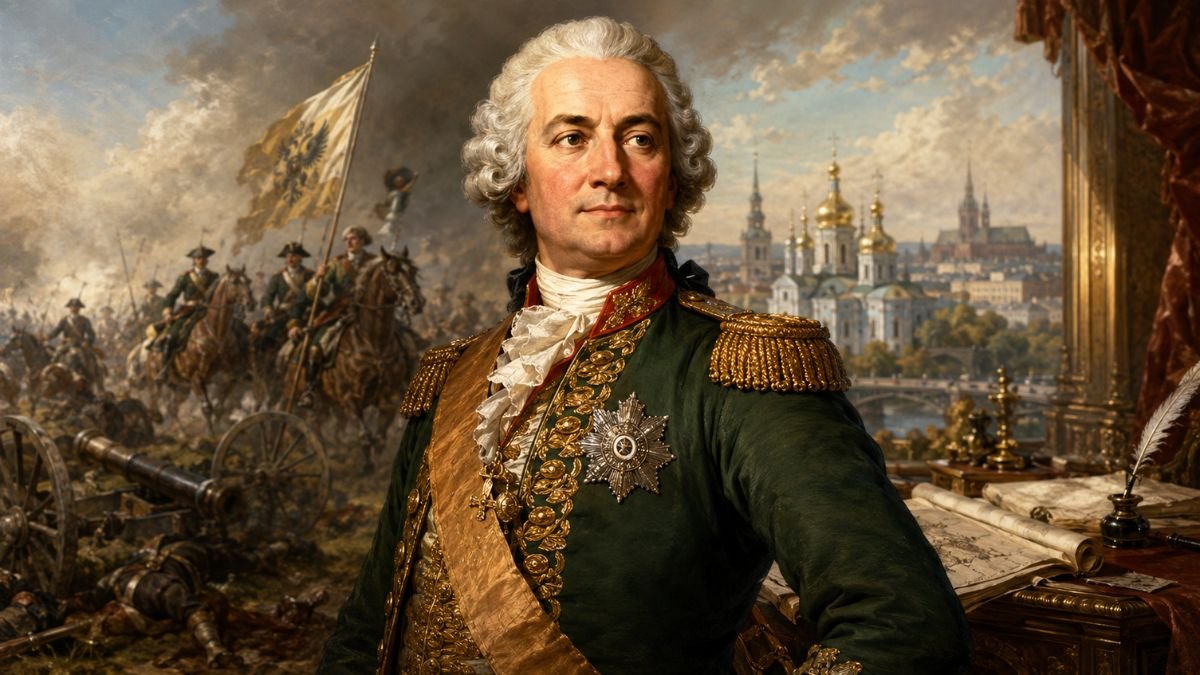
Bernhard Weißbach is a name that arouses curiosity because it can refer to more than one person, a spelling variation, or a historical reference. The strongest verified public profile connected to the name is Johann Bernhard von Weisbach, also written in variant forms such as Weißbach or Veisbakh, an eighteenth-century cavalry general and diplomat linked to the Great Northern War, the Battle of Poltava, imperial diplomacy, and Russian administration in Kyiv. His story is not a modern celebrity profile, but it carries the kind of public-interest value that readers often look for in a serious biography: identity, background, public role, verified achievements, and historical importance.
Quick Bio
| Field | Detail |
| Full Name | Johann Bernhard von Weisbach |
| Known As | Bernhard Weißbach, Johann Bernhard Graf von Weisbach |
| Profession | Cavalry general and diplomat |
| Known For | Military service, Battle of Poltava, diplomatic mission to Vienna, and service as Governor-General of Kyiv |
| Public Role | General of cavalry and imperial-era statesman |
| Active Period | Late seventeenth and early eighteenth century |
| Born | 1665 |
| Died | 1735 |
| Historical Association | Holy Roman Empire, Russian Empire, Great Northern War |
Bernhard Weißbach Biography: Who Was He?
The name Bernhard Weißbach is most meaningfully connected with Johann Bernhard von Weisbach, a military and diplomatic figure active during one of Europe’s most significant eras of power shifts. The early eighteenth century was marked by continual conflict among Sweden, Russia, the Habsburg world, and other regional powers. Within this environment, Weisbach’s career highlights included serving as a cavalry officer, directly participating in the pivotal Battle of Poltava, and later acting as a diplomatic envoy in Vienna. These roles led to his appointment as Governor-General of Kyiv, reflecting sustained trust in his skills.
Unlike modern entertainers or public figures, Weisbach’s recognition comes from historical records rather than interviews, media coverage, or personal branding. His reputation was built through military command, court service, imperial loyalty, and diplomatic usefulness, making his profile distinct from that of a typical celebrity biography yet still engaging to readers exploring his historical significance.
His career featured three major highlights: commanding forces in the Great Northern War, directing Russian diplomatic relations with Vienna, and administering governance in Kyiv. These roles illustrate a figure who moved across borders, served in high-pressure institutions, and became an integral part of early modern Europe’s political machinery.
Early Life and Background
Verified details about the early life of Bernhard Weißbach are limited. Historical references identify him as a Silesian Catholic, with service first connected to the Imperial world before his later role in Russian affairs. That background matters because Silesia sat within a complicated Central European political and cultural space, where military careers often crossed court, language, and imperial boundaries.
There is no reliable basis for adding private childhood stories, family claims, education details, or personal anecdotes. It can be stated with confidence that Weisbach emerged from the Central European military environment and developed the professional reputation to move into major service roles. In his time, a capable officer could be valued not just for battlefield ability, but also for negotiation, court communication, and regional administration.
Career and Public Recognition
Bernhard Weißbach’s public recognition is defined by several clear career achievements: he attained the rank of general of cavalry, played a notable part in the historic Battle of Poltava, and participated in campaigns that reshaped eastern Europe. These milestones solidify his reputation as more than just a military figure but as a participant in pivotal historical events.
For a military figure to be remembered in connection with Poltava means his career intersected with a major historical shift. The battle brought together the ambitions of Peter the Great and the Swedish king Charles XII, and its outcome helped reshape the balance of power. Weisbach’s presence in this context gives his biography more than personal interest. It places him within a broader European story of empire, war, diplomacy, and state-building.
His later diplomatic role also stands out. Around the end of 1719, he was sent to Vienna as a personal envoy connected with Russian interests. That mission placed him in one of Europe’s most sensitive political spaces. Vienna was central to Habsburg power, and Russian diplomacy at the time required careful handling of war, peace, religion, alliances, and imperial recognition. Weisbach’s role suggests that he was not simply a battlefield commander but also a trusted figure in delicate political communication.
By the 1730s, his authority in Ukraine had grown, and he held the office of Governor-General of Kyiv from 1731 to 1735. That position placed him in a region of major strategic importance. Kyiv was not only an administrative centre but also a deeply significant location in the political relationship between Russia, Ukraine, border defence, and Cossack autonomy. His career therefore moved from cavalry command to diplomatic service and then into high-level governance.
Personal Life and Family Context
Publicly verified information about Bernhard Weißbach’s personal life is limited. A responsible biography should not invent family details, private habits, or emotional storylines, as his public relevance comes from official roles and historical record—not personal exposure.
This distinction is important because many people searching for the name may expect a modern-style biography with personal facts, relationships, and lifestyle details. In Weisbach’s case, the safer and more accurate approach is to focus on documented public service. His life belongs to a historical period in which private records are often incomplete, inconsistent, or preserved only through military and administrative sources.
Key Facts and Interesting Details
One of the most interesting details about Bernhard Weißbach is the variety of spellings linked to his name. Readers may see Weisbach, Weißbach, or Veisbakh, depending on language, transliteration, and historical record. These variations are common among figures associated with German, Russian, and Central European contexts.
His career reflects the mobility of elite military professionals in early modern Europe, as officers served across imperial structures when they had valuable skills and connections.
Another notable fact is that his public reputation rests on both war and diplomacy. Many historical figures are remembered only for command or only for negotiation, but Weisbach appears in both contexts. His movement from cavalry service to Vienna diplomacy and later Kyiv governance shows a career shaped by trust, strategy, and political usefulness.
His connection to Poltava also gives his name lasting historical weight. The battle is remembered as a major moment in the rise of Russian power. Even if Weisbach is not the central name most readers know from that conflict, his association with it makes him part of a wider story that historians continue to examine.
Why Bernhard Weißbach Is Gaining Attention
Search interest in Bernhard Weißbach often comes from name confusion. Some readers may encounter the surname in historical writing, academic references, genealogy searches, or discussions of European military history. Others may be trying to separate Johann Bernhard von Weisbach from modern people with similar surnames or related spellings.
The name also draws attention because it seems to belong to a well-documented public figure, yet the available information is scattered across historical contexts. That creates a common search problem: readers find fragments but need a clear explanation of who Bernhard Weißbach was, and who the most notable one was.
Another reason for curiosity is the dramatic nature of his historical setting. The Great Northern War, the Battle of Poltava, Russian diplomacy, and Kyiv governance are all rich search topics. A person connected to all of them naturally becomes relevant to readers interested in military history, European political biography, and early modern state power.
Public Image, Privacy, and Media Interest
Bernhard Weißbach does not have a modern public image in the celebrity sense. There are no verified interviews, entertainment appearances, social media profiles, or contemporary media campaigns connected to the historical figure. His public image is built through records of service, historical references, and the larger events in which he participated.
Accuracy is essential. When sources are limited, writing should avoid speculation. Biographies deserve clarity and honesty about what is verified. The strongest picture is of a general, diplomat, and administrator influential in key settings.
Media interest around names like this usually grows when search engines connect variant spellings or when readers discover a historical figure through a larger event. The safest approach is to treat Bernhard Weißbach as a historical-profile subject rather than a modern celebrity. His importance comes from public service and historical context, not fame in the entertainment sense.
Conclusion
Bernhard Weißbach is best understood as a historical name most strongly associated with Johann Bernhard von Weisbach, a cavalry general and diplomat whose career spanned the Battle of Poltava, Russian-Habsburg diplomacy, and the governorship of Kyiv. His story shows how a figure outside modern celebrity culture can still attract public curiosity through verified achievements and ties to major events. A responsible biography should focus on documented facts, clarity of names, and historical relevance rather than unsupported personal claims.
FAQs
What is Bernhard Weißbach known for?
Bernhard Weißbach is best known through the historical figure Johann Bernhard von Weisbach, a cavalry general and diplomat associated with the Battle of Poltava, Russian diplomacy, and service as Governor-General of Kyiv.
Why are people searching for Bernhard Weißbach?
People often search for the name because it appears in various spellings and may refer to historical or contemporary individuals. The most notable verified figure is the eighteenth-century general and diplomat Johann Bernhard von Weisbach.
Was Bernhard Weißbach a celebrity?
No. He was not a modern celebrity. His public recognition comes from historical military, diplomatic, and administrative roles rather than entertainment, media appearances, or celebrity culture.
Is Bernhard Weißbach connected to the Battle of Poltava?
Yes. Johann Bernhard von Weisbach is publicly identified as a general of cavalry and a participant in the Battle of Poltava, a major 1709 battle during the Great Northern War.
What verified facts are known about Bernhard Weißbach?
Verified public facts identify him as Johann Bernhard von Weisbach, born in 1665 and died in 1735, known as a cavalry general, diplomat, envoy to Vienna, and Governor-General of Kyiv from 1731 to 1735.
