

When our dentist first mentioned braces for my daughter, she was thirteen and the response was immediate: absolutely not. Not because of the treatment itself but because of what would show up in every school photo, every group picture at a friend’s birthday, every video someone else posted her into without asking, for the next year or more.
I will admit my first reaction was that this was vanity and that she would get over it. I was wrong, and I think a lot of parents are wrong about this in the same way. Being photographed constantly by other people, tagged in things you did not choose, is just a normal part of being a teenager now in a way it was not for me at her age. Since we live around Whitefield, we started looking into Invisalign instead, mostly to see if it was even a realistic option for her bite.
Why the visibility question is not really vanity
Our dentist was fairly matter-of-fact about it. Metal braces are effective but they are also highly visible in every photo for the entire treatment period and for a teenager already navigating a lot of self-consciousness, that visibility is a genuine daily consideration, not a shallow one.
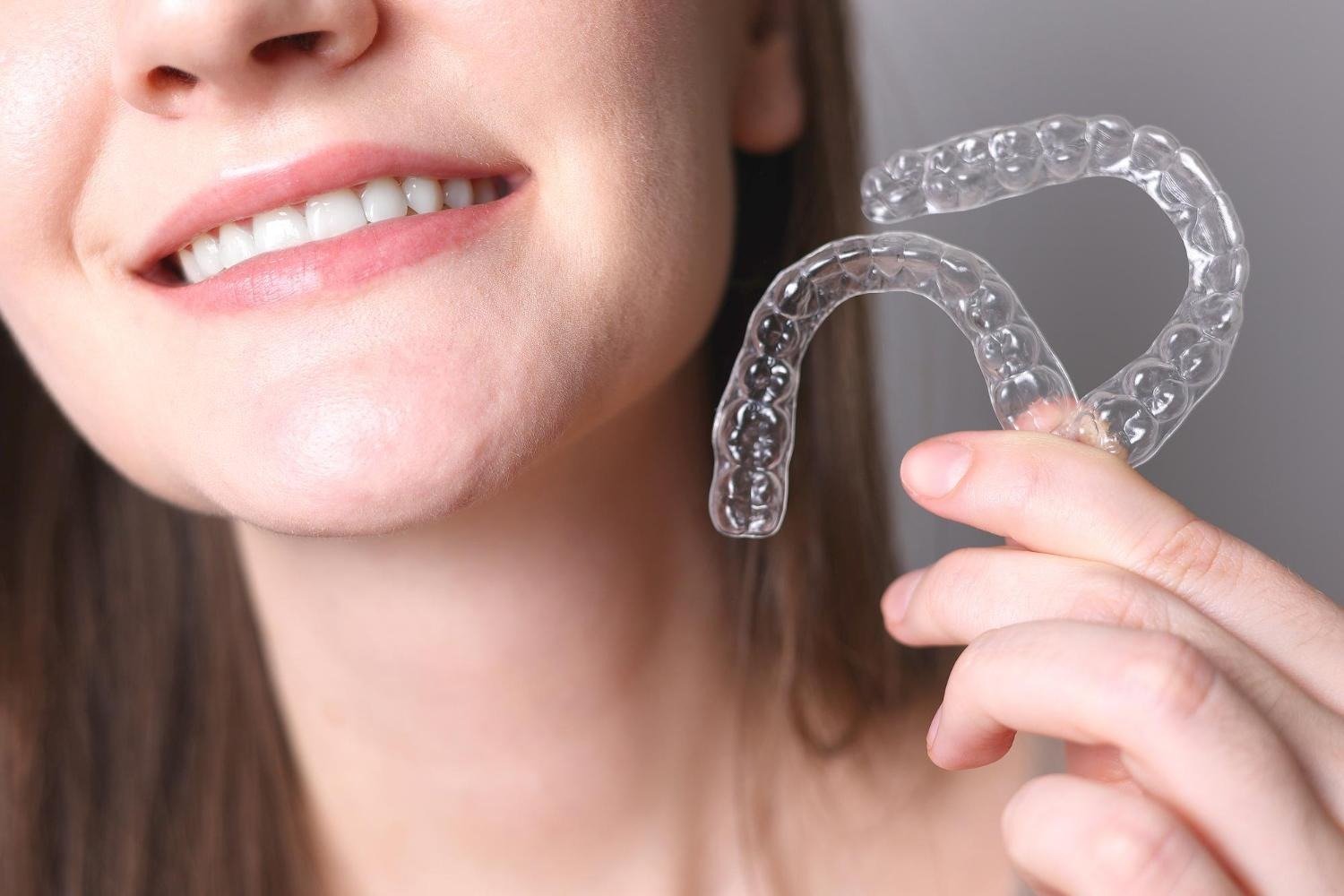
Invisalign uses a series of clear, custom-fitted aligners instead of brackets and wires. They are not invisible, despite the name but they are dramatically less noticeable, which mattered to my daughter in a way I had underestimated going in.
What the process is actually like
It started with a scan of her teeth, used to design a full sequence of aligners tailored specifically to her mouth. Each one gets worn for one to two weeks before moving to the next in the sequence, gradually shifting her teeth into position.
The part nobody warned us about clearly enough beforehand: Invisalign only works if it is actually worn, around twenty to twenty-two hours a day. We had a rocky first month where she kept taking them out at school and forgetting to put them back in after lunch and progress genuinely stalled because of it. That is worth knowing before you start, because the responsibility sits with the teenager in a way fixed braces simply do not require.
What actually helped
Keeping the aligner case in the same spot every single day, by the bathroom sink, cuts down on the forgetting considerably. We also set a rule that she was not allowed to eat with them in, which sounds obvious but taking a genuine habit shift and checking in with her every couple of weeks rather than waiting for the full review appointment helped catch the slipping compliance before it became a real setback.
Cost was roughly in line with what traditional braces would have cost for her case, though our dentist was clear that more complex bites can sometimes cost more with Invisalign and that a retainer afterwards is an additional cost worth budgeting for from the start.
Is it right for every teenager
Our dentist was honest that Invisalign is not automatically the answer for every case. Some more complex bite issues still need fixed braces or a combination of both. I appreciated that she said this plainly rather than recommending Invisalign simply because it happened to be what we came in asking about.
Whitefield Dental Practice, where a friend’s son has also gone through treatment, apparently sees a lot of this exact request from families in Whitefield now teenagers specifically asking for Invisalign because of photos and social media, rather than parents pushing for it.
I went in thinking my daughter’s objection to metal braces was a bit dramatic. Having watched a full year of her treatment now, I do not think that anymore. Invisalign gave her a way to get her teeth properly sorted without adding another daily source of self-consciousness to an age that already has plenty of that. It asked more of her in terms of responsibility than braces would have. It also, I think, respected what she was worried about, which counted for a lot.